

Social media marketing continues to evolve at an incredible pace. What worked just a few years ago may no longer deliver the same results today. Platforms constantly introduce new features, algorithms change, and user behavior shifts as technology advances. Businesses that stay ahead of these changes are more likely to attract attention, build stronger communities, and achieve long-term growth.
One of the biggest trends shaping the future of social media is the increasing demand for authentic content. Modern audiences are becoming less interested in overly polished advertisements and more interested in genuine interactions. Brands that communicate honestly, share behind-the-scenes content, and build real connections often outperform those that focus solely on selling products.
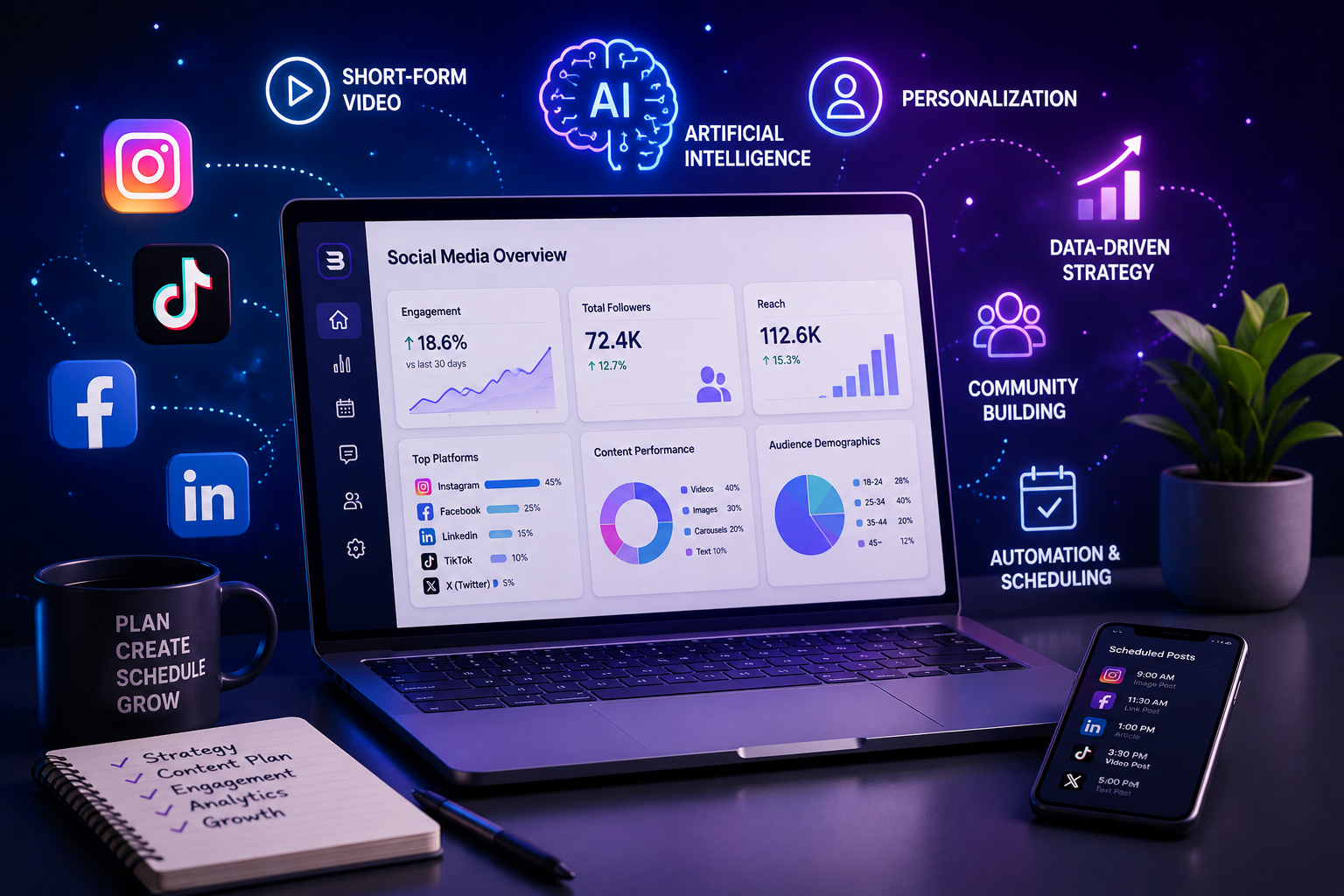
Another important development is the rise of short-form video. Video content continues to dominate engagement across nearly every major platform. Short, informative, and entertaining videos allow brands to communicate messages quickly while capturing audience attention in crowded feeds. Businesses that invest in video creation are likely to see higher engagement and improved visibility.
Artificial intelligence is also transforming the way marketers work. AI-powered tools can help generate content ideas, analyze performance data, identify audience trends, and automate repetitive tasks. This allows businesses to focus more on strategy and creativity while improving efficiency. Companies that embrace AI technologies will gain a significant competitive advantage in the coming years.
Personalization is becoming increasingly important. Users expect content that feels relevant to their interests and needs. Advanced analytics and audience segmentation help businesses deliver more targeted messages, resulting in stronger engagement and higher conversion rates.
Data-driven decision-making will continue to play a crucial role in successful marketing strategies. Businesses now have access to more performance data than ever before. Understanding audience behavior, engagement patterns, and campaign results allows marketers to make informed decisions rather than relying on guesswork.
Community building is another trend gaining momentum. Successful brands are focusing less on follower counts and more on creating meaningful relationships with their audiences. Engaged communities often generate stronger loyalty, more referrals, and higher customer retention than audiences built solely through advertising.
Automation is expected to become a standard part of social media management. As businesses manage more platforms and create more content, scheduling tools and workflow automation help maintain consistency without increasing workload. Automation improves efficiency while ensuring a reliable online presence.
The future of social media marketing belongs to businesses that combine creativity, technology, and strategic planning. Companies that adapt to changing trends, invest in quality content, and focus on building genuine relationships will be best positioned for long-term success in an increasingly competitive digital environment.
As the digital landscape continues to evolve, flexibility and innovation will remain essential. Businesses that continuously learn, experiment, and improve their strategies will be able to unlock new opportunities and stay ahead of the competition.